Since relocating to London a little over two years ago, one of my big goals was to see as much of Europe as I could. I didn’t get to see much of it as a cash-strapped rowing student at university, and then I spent many years in Africa, where a trip to Europe always felt like a “some-day” event.
I’ll be starting a new role at the end of this month as Pricing and Profitability Lead for the European division of Rentokil, a multinational FTSE 100 business services company. At Toyota, where I have been for the past couple of years, there’s a phrase – Genchi Genbutsu – which translates roughly as “go and see for yourself.” So, in that spirit, ahead of taking on a role focused on Western Europe, off I went to Europe.
The opportunity presented itself in late July – part birthday present to self, part celebration of a career milestone, and part attempt to satisfy an unsatiated curiosity about Europe’s culture, history, and landscapes.
A car, the Schengen area, a credit card, and 12 days to go wherever. The rough plan was to start in Belgium, drive south through Luxembourg to eastern France, and then explore the southern German Alps.
I set off from Wimbledon down to Dover in my trusty Toyota C-HR, a journey of just under two hours, checked in for the ferry, and upgraded myself to the lounge for the two-hour crossing to Calais. First time using a ferry – the trip was excellent, all went to plan.
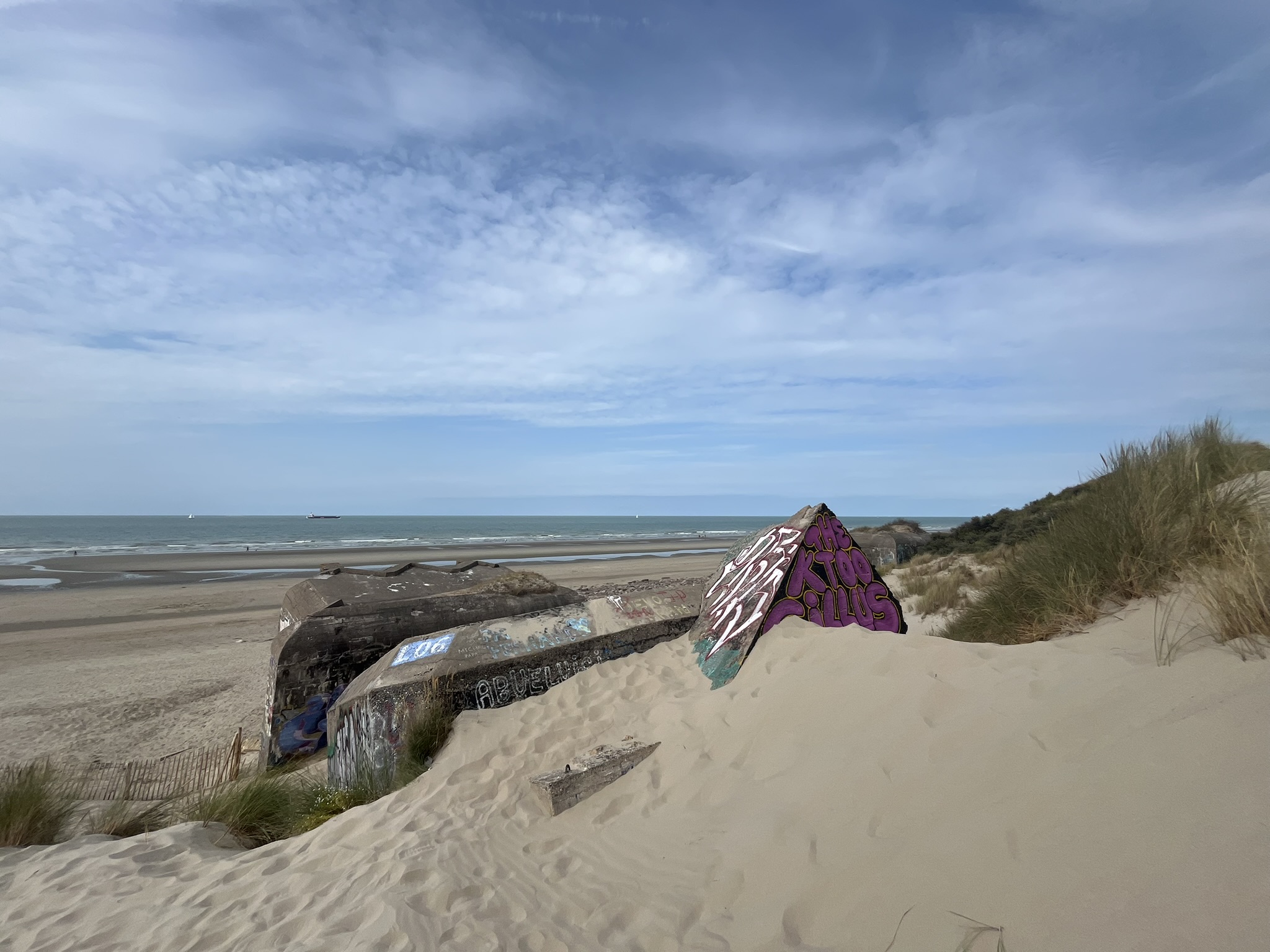
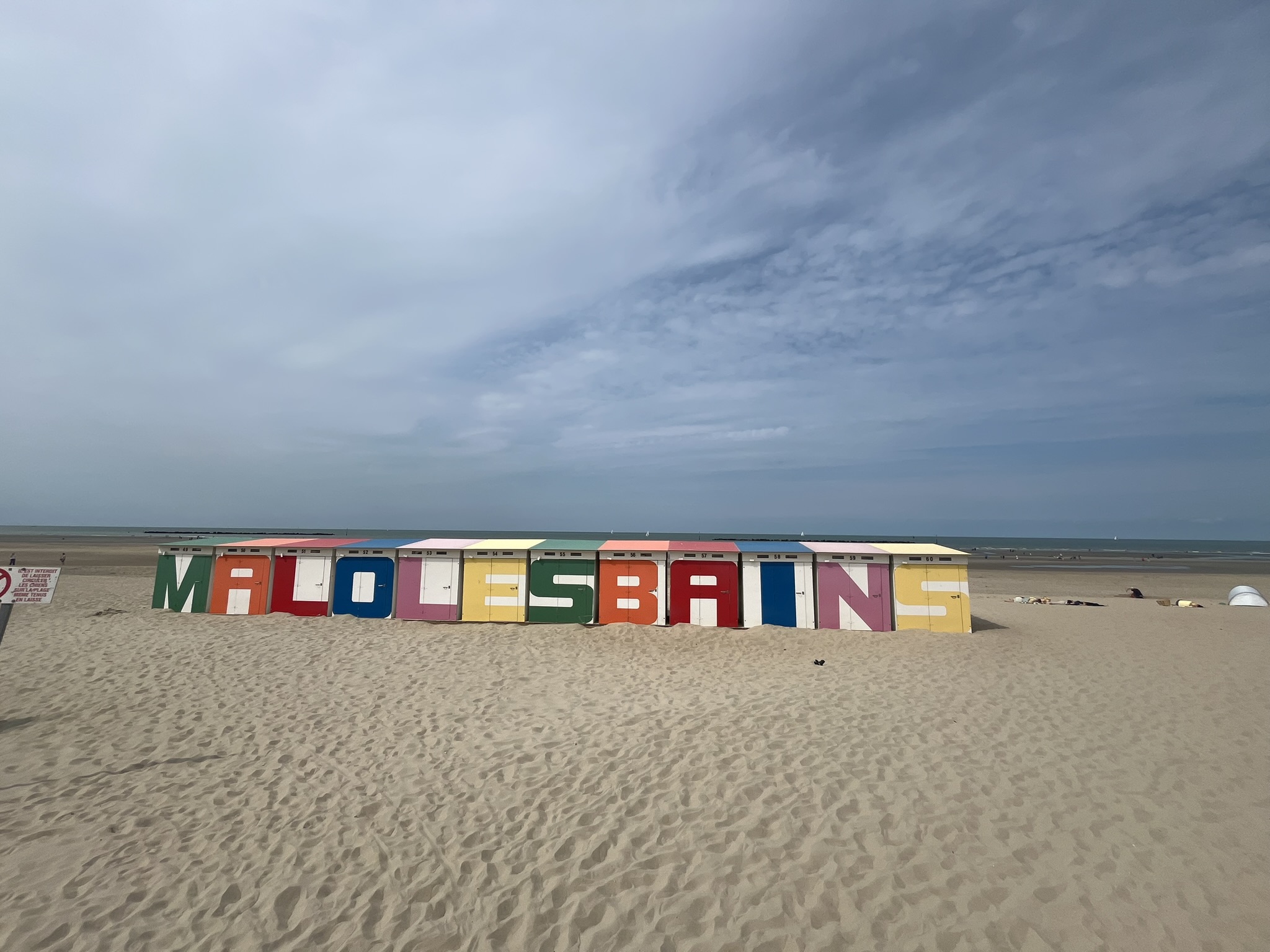
Arriving in Calais, my first stop was Dunkirk, site of the pivotal Operation Dynamo evacuation of 1940, which rescued almost 340,000 Allied soldiers. Several months earlier, on a separate trip to Dover, I’d explored the castle and the tunnels from where Operation Dynamo was conducted, so it felt surreal to stand on the beaches, just 20 miles across the Channel from where it all took place. Walking Malo-les-Bains and the bunkers among the dunes, I thought back to that pivotal moment in the war, when the future of Europe hung in the balance, and tried to imagine what it was like to be there – explosions, gunshots, boats, shouting, chaos.
From Dunkirk it was a short 45-minute drive to Bruges. All the nice things you can think of are plentiful there – Belgian chocolate, beer, waffles. The next morning, up the famous Belfry tower for a view over the picturesque medieval city, then a brief stop in Ghent, which is similar to Bruges but less touristy. I saw the magnificent Ghent Altarpiece (Adoration of the Mystic Lamb) by the van Eyck brothers – a masterpiece of 20 painted panels, completed nearly 600 years ago. I stopped for coffee at an amazing café called Mosquito Coast, almost a place of pilgrimage for travellers, its walls covered in photos from all over the world where the owner has been. I’d recommend a visit. Passed the Gravensteen Castle, originally built around 1,000 years ago. It’s worth noting that Bruges’s own medieval wealth came from its role as a Hanseatic trading hub, but a good deal of Belgium’s later grandeur – the ornate buildings and boulevards you see across the country, including in Brussels – was bankrolled by Leopold II’s personal exploitation of the Congo Free State in the late 19th century, one of the darker chapters of colonial history, built on forced labour and immense human suffering. It’s a strange thing to reconcile with a country otherwise so associated with chocolate and waffles. Then back to the car and through the Ardennes towards Luxembourg. Every few miles a signpost pointed to some château that looked worth visiting – but that’s for another day, as I needed to press on to Luxembourg.
Luxembourg and Liechtenstein were places I’d always heard about and wondered what they were actually like, given how often companies use them as low-tax jurisdictions. I walked around Luxembourg City and saw the casemates, lit up at night, adding extra ambience. Luxembourg, I understand, has one of the more generous state pension schemes in Europe, with people eligible to earn up to €12,000 a month depending on years of contribution and earnings. It’s attractive to companies for its extensive network of double tax treaties that reduce withholding tax on cross-border payments, tax-free receipt of dividends and capital gains, no withholding tax on interest payments, and EU market access that lets financial services firms sell products across the whole EU/EEA from a single licence.


The next morning I drove to Vianden Castle. One thing I’ve learned about castles in Europe is that they’re generally best viewed from the outside – inside they tend to blur together, all dark, dingy rooms and old furniture cobbled together to approximate what it looked like centuries ago. It’s humbling, too, to realise that most of us today live materially better lives than those who lived in castles several centuries earlier.


From Vianden it was on to Trier, the Roman city in Germany famous for its Porta Nigra (“black gate”), built around 170 AD under Marcus Aurelius as a defensive structure, passing recently harvested German rolling wheat fields along the way. Trier was a major Roman trading hub – legend traces its founding back to 16 BC.
A highlight in Trier was visiting Karl Marx’s childhood home and seeing an early edition of Das Kapital. Philosopher, social scientist, traveller, lawyer by training – his parents wanted him to settle into law, but he found his interests elsewhere. He eventually moved to London, spent much of his time reading and writing in the British Museum’s library, and was financially supported by his friend Friedrich Engels. The chair he used during his years of reading in London was on display in the museum. The irony, of course, is that the ideas Marx wrote about were themselves underwritten by the wealth of a friend who profited from industry.


Leaving Trier, the next stop was Strasbourg, on the French-German border. On the way I passed Jim Ratcliffe’s INEOS car plant at Hambach, the former Mercedes-Benz site – a reminder of how much European carmakers have struggled with high costs, particularly energy, cheap imports, and emissions limits. Strasbourg is the official seat of the EU Parliament, and over dinner, watching the crowds of young people wining and dining, I found myself wondering how many of them were drawing, one way or another, on the EU’s roughly €190bn annual budget. I also wondered how many dinners Jim Ratcliffe has hosted for EU officials trying to improve conditions for car manufacturing. Strasbourg itself is a remarkably pretty town, especially the Petite France quarter, with its timbered houses along the rivers and flowers on the bridges and windowsills. Strasbourg Cathedral (Notre-Dame), at 142m, was the world’s tallest building for several centuries and is famous for its astronomical clock.


From Strasbourg I drove to Baden-Baden, in the southern state of Baden-Württemberg – the “Surrey of Germany,” as I like to call it – famous for its Roman thermal baths and the recently renovated Brenners Hotel, which I’d read about and wanted to see. Interestingly, the hotel is owned by the multinational food group Dr. Oetker, acquired by Rudolf-August Oetker in 1941.


Driving along the autobahn was exhilarating at first – being able to drive at an unlimited speed felt like a novelty – but strangely, doing 100mph became almost normal after only a few hours (like many things in life, initial novelty tends to wear off pretty quickly). I kept watching BMWs and Mercedes whizz past me, wondering why I couldn’t keep up with them, until I got back to Toyota and realised the cars are electronically capped at around 112mph. A small, humbling reminder of German engineering pride versus everyone else’s.
From Baden-Baden I drove to Basel, right at the northern edge of Switzerland – Roger Federer’s home town. I spent my birthday there, going for a run along the Rhine and finishing with a dip in the river, as the locals do, followed by breakfast at Restaurant Du Pont. Many Swiss people float down the Rhine in summer; some apparently commute to work that way, carrying a Wickelfisch dry-bag alongside them with their work clothes inside. If only the same could be done on the Thames. Basel, I learned, is home to some of the world’s largest pharmaceutical companies – Roche and Novartis among them.
I was relieved to only spend one night in Switzerland given the cost of the country, but enjoyed the scenic drive through it, stopping briefly in “Heidiland,” where the novel Heidi is set – which I think I last read around age eight. Plenty of visitors from South Korea and the Middle East, a reminder of just how powerful cultural exports can be for a tourism industry.


Switzerland struck me as a genuinely remarkable place – it ticks nearly every box: low crime, controlled immigration, strong public health, clean, wealthy, picturesque, prosperous, safe, no war, world-class companies, a strong currency. And you couldn’t name their prime minister if you tried – there isn’t one. Instead, the country is governed by a seven-member Federal Council that collectively acts as head of state and government. Getting a Swiss passport requires, among other things, ten years of residency, proven fluency in a national language, and financial independence with no recent reliance on social welfare. Perhaps other European countries could learn a thing or two.
From Heidiland I went up to Liechtenstein, spending the afternoon in Vaduz. Liechtenstein and Luxembourg are often lumped together but are quite different: Luxembourg is in the EU, while Liechtenstein sits outside it but inside the EEA alongside Norway and Iceland, uses the Swiss Franc, and has a customs union with Switzerland. Luxembourg dominates investment funds and holding companies, while Liechtenstein has historically been known for private wealth vehicles – foundations (Stiftung) and establishments (Anstalt). Beyond wealth management, it’s also known for high-tech manufacturing, including dental products, precision instruments, and specialty chemicals; one of the world’s largest dental companies, Ivoclar, is based there. In the centre of Vaduz is the Onassis Foundation, established by shipping magnate Aristotle Onassis in his will to honour the memory of his son Alexander, who died at 24 in a plane crash in Athens in 1973.


Next stop was Lake Constance (the Bodensee) in Germany, a lake bordering Germany, Switzerland, and Austria, with water pure enough to drink. After Lindau came a coffee stop in the historic town of Füssen, then a hike up to the extraordinary fairytale Neuschwanstein Castle, which has inspired countless films, including the Baron’s castle in Chitty Chitty Bang Bang, Sleeping Beauty, and the Walt Disney logo itself.


Next was Mount Zugspitze, Germany’s tallest peak. A breakfast stop along the way cost me €13 for a coffee and an apple strudel with cream – steep, but so was the mountain. I didn’t have the time or gear to hike the full route, so I took the cable car up and walked the final stretch to the summit, reaching just over 2,900m. The views were incredible – peak after peak across the Alps, including Piz Bernina, which I’d seen back in February on the way to St. Moritz. At the base was the extraordinary turquoise water of the Eibsee, a great spot for a refreshing dip after the summit. I imagine the views up there are entirely different in winter, under snow and ice. A beer with currywurst and chips on top of the mountain rounded things off nicely.
Drove through Garmisch-Partenkirchen, stopping for a pastry and coffee in the historic ski town, then a brief pass-through Innsbruck, a university town and outdoor sports hub in Austria. I stayed that night at a small B&B called Haus Susanne, about an hour south of Salzburg, run by a British couple who’d emigrated to Austria – I’d recommend it to anyone heading that way.


The next morning I drove on to Salzburg, stopping briefly at the Gschwandtanger hill in Werfen, where the “Do-Re-Mi” sequence from The Sound of Music was filmed, overlooking Hohenwerfen Castle. It’s remarkable to think the film was made over 60 years ago and is still generating meaningful tourism receipts for this part of Austria.


Then on to the Berchtesgaden National Park, where I stopped at the visitor centre. It was crowded enough that the next bus up to the Eagle’s Nest was a couple of hours away, so I hiked instead – a steep, sweaty climb that took roughly the same time. Eagle’s Nest is a surreal spot. I first learned about it in school history classes and had wanted to visit ever since; I finally made it. The views over Germany, Austria, and the Königssee are extraordinary. It’s a strange, unsettling thing to stand there and realise how much of the Nazi leadership’s strategic thinking took place looking out over that exact view during the 1930s and 40s.


Then on to Salzburg itself, probably my favourite town of the whole trip – steeped in history and architecture. I walked past Mozart’s childhood home and stopped for coffee at Café Bazar along the Salzach river. Drove out to the nearby town of Oberndorf, home of the chapel where “Silent Night” was first performed. Standing there at 36°C, it took some imagination to picture it on a snowy Christmas Eve, with coats, decorations, and mulled wine.

After a dip to cool off in the Abtsdorfer See, I visited Schloss Hellbrunn, built for the Prince-Archbishop Markus Sittikus von Hohenems in the early 1600s, famous for its trick fountains and water gardens, all engineered centuries before modern plumbing. From there, on to Schloss Leopoldskron, the striking palace overlooking its own lake, which provided much of the backdrop for The Sound of Music. Before that, I also took a dip in one of the canals running through the city centre, as the locals do in 36-degree heat.


On my final morning in Salzburg, I walked up to the fortress on the hill early enough to beat the crowds, passed Nonnberg Abbey, and headed back towards the B&B.
Passing by Nonnberg Abbey, I found myself thinking about “Climb Ev’ry Mountain” – the song the Mother Abbess sings to Maria, urging her to search out every path and possibility until she finds the dream she was meant to live. It’s a piece about persistence as much as destiny: the mountains have to be climbed, the streams forded, the rainbows chased, before the dream reveals itself. Standing where the real abbey once inspired that fictional counsel, it struck me how much of this trip has been its own version of that search – each border crossing and unfamiliar road another byway followed in the hope of finding something worth the effort of the journey itself.
Drove out of the city past a few more of the famous Sound of Music villas, then on to Munich, about 1.5 hours away.
Had a great conversation with a German global value investor at a Bavarian beer garden about global deep value investing and his read on the German economy – his view being that it’s struggling mainly under the weight of high electricity costs.
He also had a lot to say about the pressure facing Germany’s Mittelstand – the network of small and mid-sized, often family-owned manufacturers that have historically been the backbone of German industrial strength. According to him, many of these firms, particularly in machinery and specialized components, are now finding Chinese competitors producing comparable technology at a fraction of the cost. What used to be a durable edge built on decades of engineering reputation is being eroded fairly quickly, and it’s forcing a lot of these companies to either move upmarket, automate aggressively, or accept shrinking margins.
From Munich I drove along the Romantic Road, through towns like Nördlingen, to Nuremberg. I only had time for a walk around the old town – properly visiting the Zeppelinfeld rally grounds and the Nuremberg Trials museum would have taken at least a full day on its own, so that’s one for a return trip.
Started heading back towards London, stopping briefly in Bamberg on a recommendation from along the way, then to Luxembourg to refuel – it has some of the cheapest fuel prices in Europe, thanks to lower fuel duty – and on to Brussels for the last night of the trip.
On the final day I stopped in Ypres, Belgium, to see a few historic sites – first the Menin Gate Memorial to the 55,000 missing British and Commonwealth soldiers of the First World War who have no known grave. Had lunch on the banks of the Ieperlee, thinking about how fortunate my generation has been never to have had to fight in a war, and how unimaginably hard it must have been for the families of those who did. Ironically, even as material life has become far easier, mental health struggles have only grown. I then drove to Essex Farm Cemetery, where the John McCrae memorial stands. McCrae was a Canadian army doctor who wrote “In Flanders Fields” at that site after presiding over the funeral of a close friend during the Second Battle of Ypres. He died later in the war of pneumonia and meningitis.


From Ypres it was back to Calais, a stop for a few French cheeses, and then the drive home to London, arriving at midnight.
Doing a post-trip expense breakdown with new AI tools, I found that fuel and parking was the single biggest expense category, at 24% of the total. One of the unintended consequences of doing a trip like this by car is just how much you end up paying in parking fees – every town, every stop, another small charge that adds up far more than you’d expect over 12 days.
Another observation that speaks directly to my day job in pricing: the fixed-to-variable split of the trip’s costs came out at roughly 60/40 – 60% fixed regardless of whether it was one traveller or two. That’s not far off the cost structure of a lot of businesses, and it’s a reminder of the operating leverage built into a trip like this: add a second or third traveller and the fixed 60% barely moves, so the cost per person falls sharply. It’s the same logic behind route density economics in field-service businesses – more stops per fixed route cost, more profit per mile. Fittingly, this is almost exactly the kind of problem I’ll be working on at Rentokil, where improving route density across Europe is a core lever for profitability. On a small note of foreshadowing, I actually spotted a Rentokil van at a roadside station in Belgium along the way – a nice coincidence given I was about to begin my journey there.

So that’s it: 3,734km, 6 countries, 12 days – experiences and memories for a lifetime. Thanks to the amazing travel app Polarsteps, for tracking my journey along with the memories.

Genchi Genbutsu, or going and seeing for myself, in the end, taught me more in twelve days than any amount of reading could have – not just about the places themselves, but about how much of Europe’s history sits quietly under the surface of towns that today just look pretty on a postcard.