I was inspired to visit Milan by an acquaintance who posted on LinkedIn about taking a day trip from the UK a couple of years back – for little more than the cost of a few pints. He caught an early morning flight, toured the main sights, and was back in London by evening. I considered doing the same, then thought: why rush? A weekend would be a bit more relaxing. A quick search online turned up a return flight for £30 – cheaper than the train & bus to the airport and back.
After work on Friday, I boarded a bus to Stansted, around two hours from south London, fuelled myself with a coffee at the airport Wetherspoons (a great British institution), and boarded a Ryanair flight at 10pm.
Arriving at Milan Bergamo a couple of hours later, I took a pre-booked coach to Milano Centrale, the city’s main station, then hopped on a night bus to my hostel on the southern side of the city, arriving around 2am local time.
Day One: Art, Architecture and Aperitivo
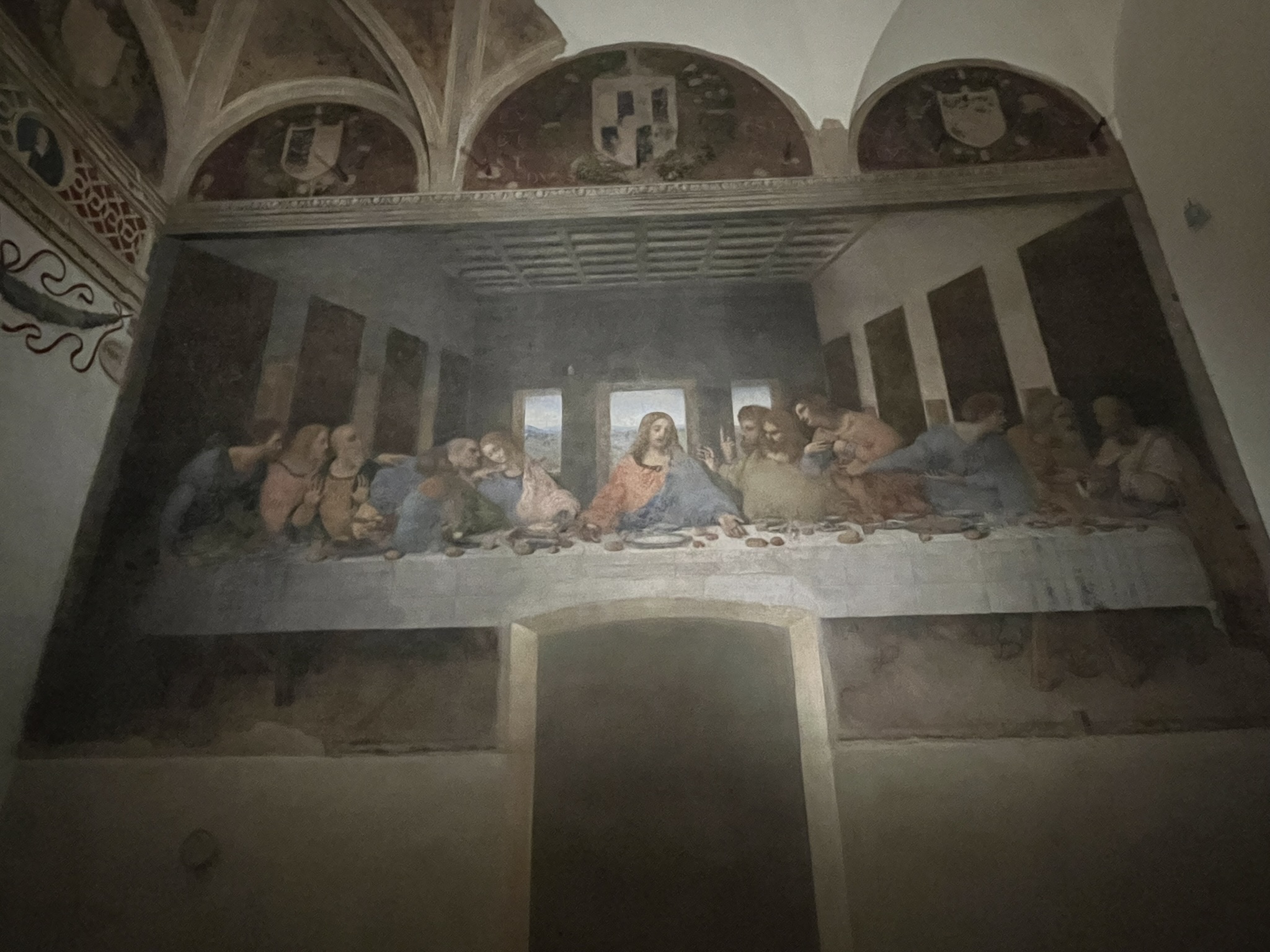
I woke at 6.30am to what was genuinely the best complimentary breakfast I’ve had in years of hostel travel – a wonderful surprise. Suitably fuelled, I set off on foot for the Basilica di Santa Maria delle Grazie, which houses Leonardo da Vinci’s famous Last Supper fresco.
Getting a ticket for this was quite the challenge. Tickets are released quarterly in advance, and tour operators snap up the majority to repackage as guided tours at €70–80 a head – compared to the face value of just €15. The trick is to keep checking the official website, as individual tickets do occasionally become available. It’s worth the persistence.
Seeing the Last Supper in person was incredible. Viewings are tightly controlled: strict 15-minute slots, doors closed on entry, and you’re escorted out when your time is up. Leonardo painted it between 1495 and 1498, commissioned by the Duke of Milan for the dining hall of the adjoining convent. It depicts the moment Jesus announces to his disciples that one of them will betray him – Judas is shown clutching his bag of silver coins. Sadly, the materials Leonardo used meant the fresco began to deteriorate almost immediately after completion, and it has required ongoing conservation efforts ever since. This was one of the moments I often get when I travel to see incredible sights, where I think to myself. Someday, years ago, I wondered whether I’d ever see the Last Supper, and dreams then become reality.
Over the centuries, it has survived an extraordinary amount: Napoleon’s troops using the refectory as a stable and hurling objects at the wall; a flood in 1800; and even the Allied bombing raids of August 1943, which destroyed much of the surrounding buildings. The fresco was protected by sandbags the Italians had carefully placed around it – and survived intact.
Afterwards, I stopped at a typical Milanese coffee bar for an espresso and a brioche, pausing to appreciate that it was in a café much like this one that Howard Schultz first got the idea for Starbucks. A brief wander took me to the Arch of Peace, commissioned by Napoleon Bonaparte in 1807 to celebrate his military victories. Initially conceived as “Napoleon’s Triumphal Arch”, it was ultimately completed under Austrian rule and rededicated to the peace achieved across Europe following the Congress of Vienna in 1815 – hence the name.
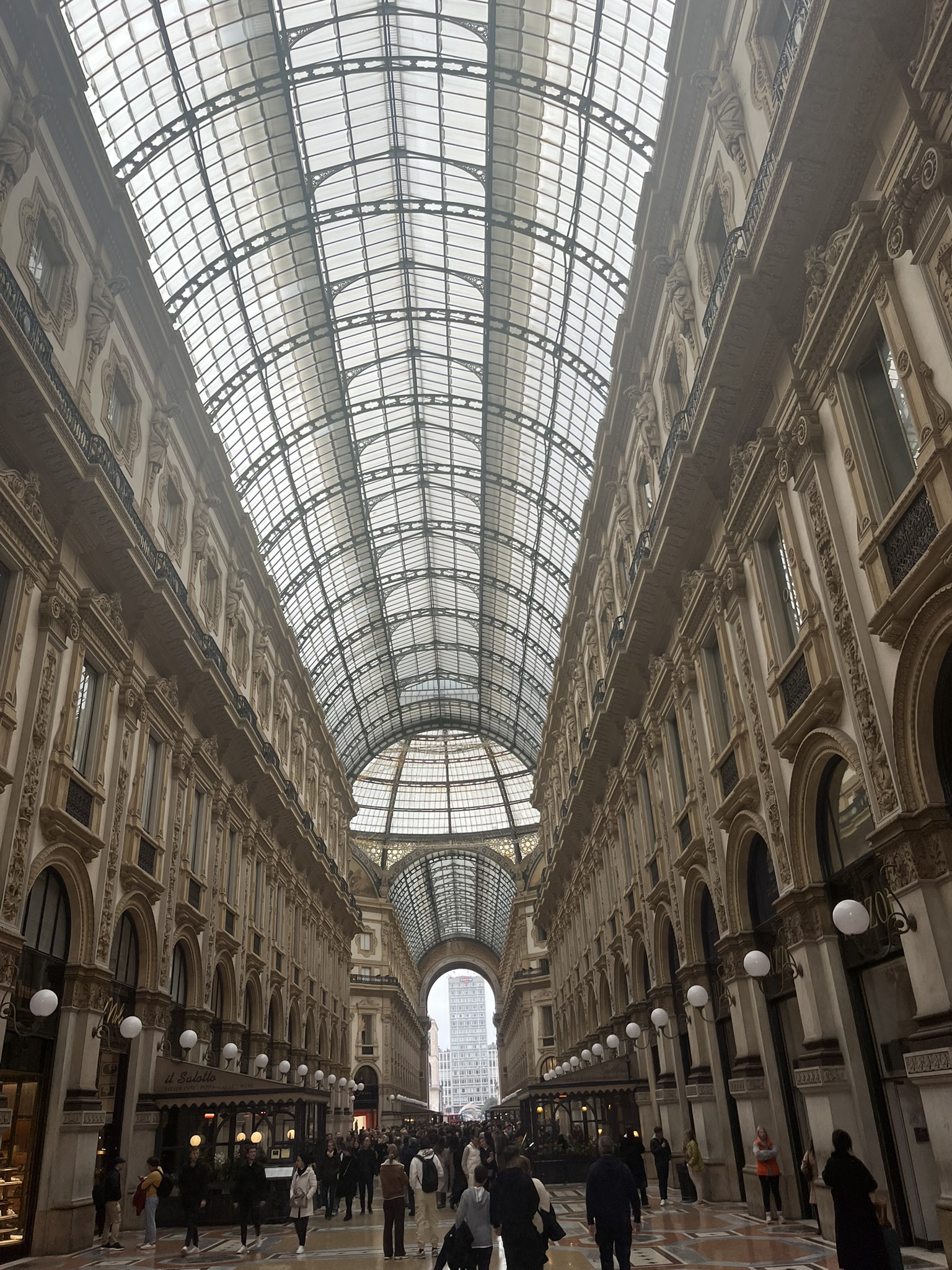
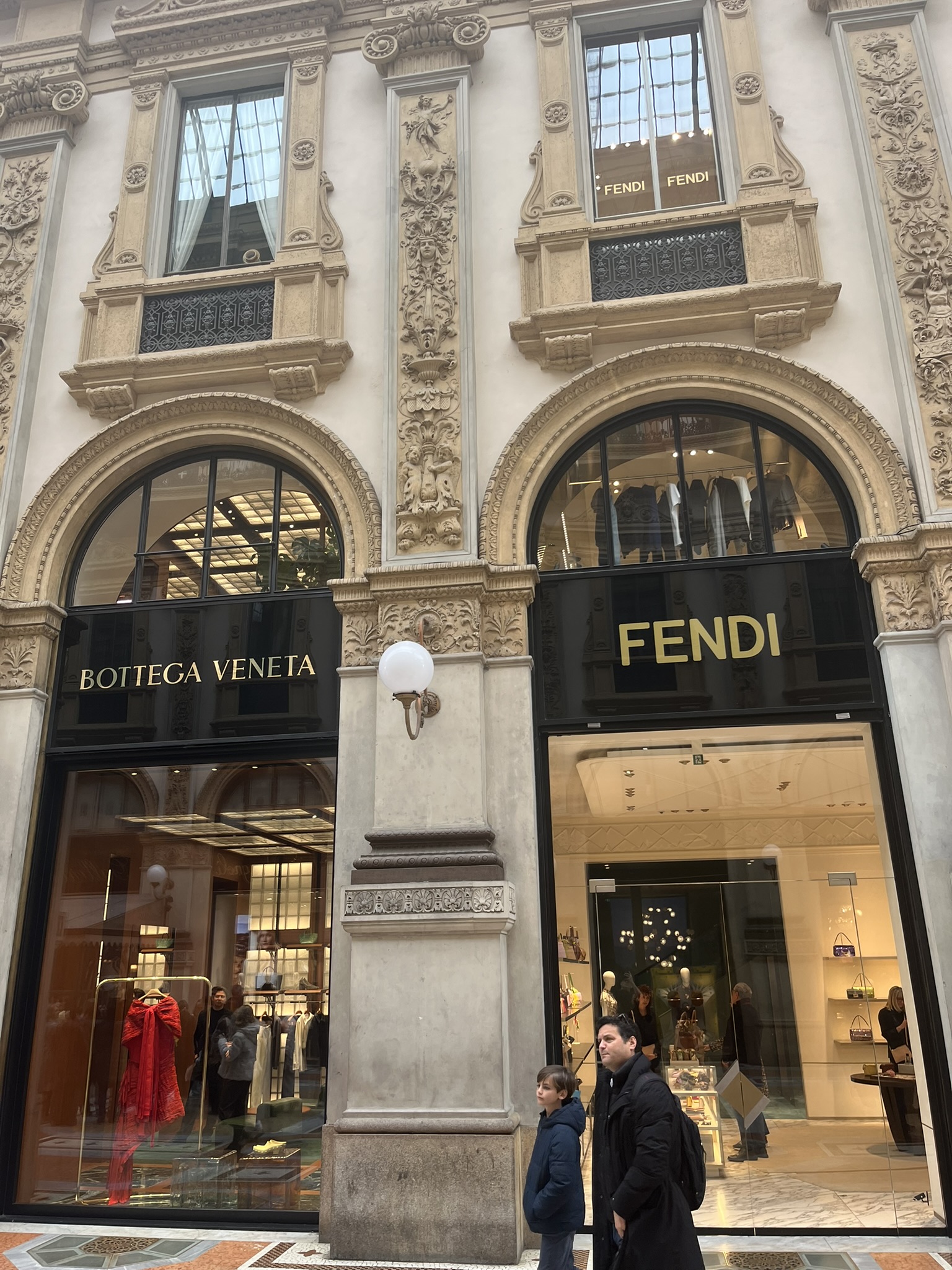
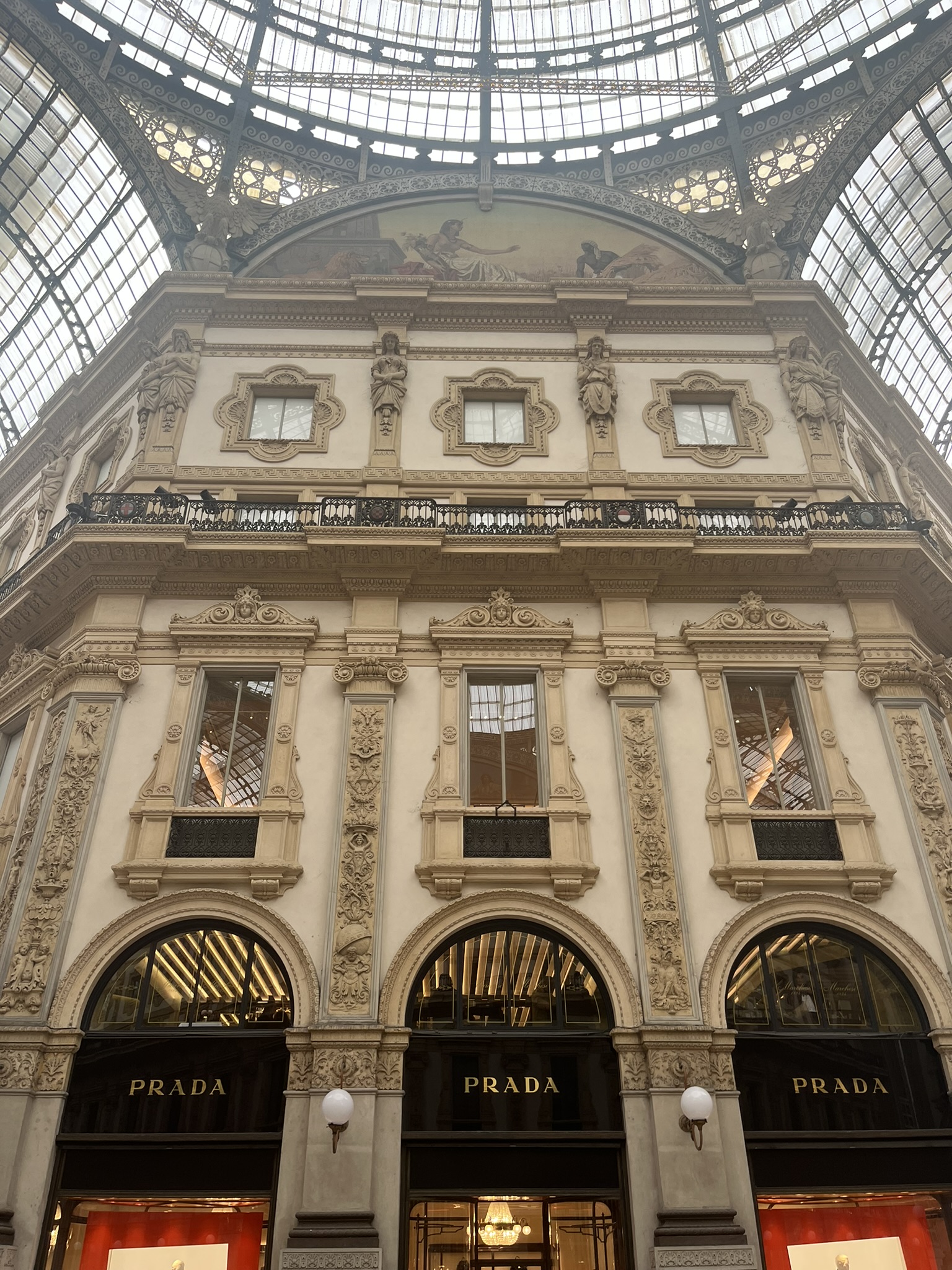
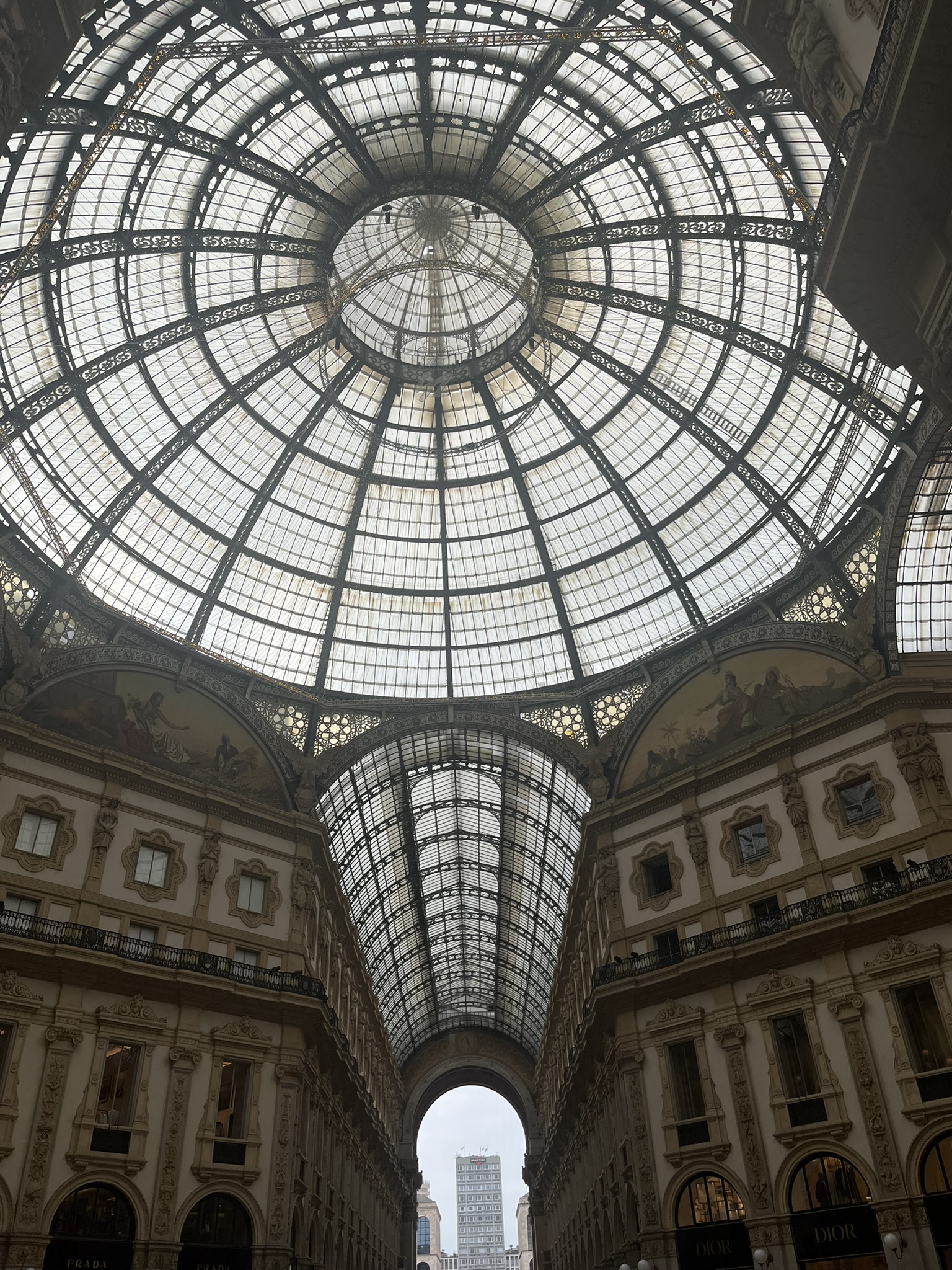
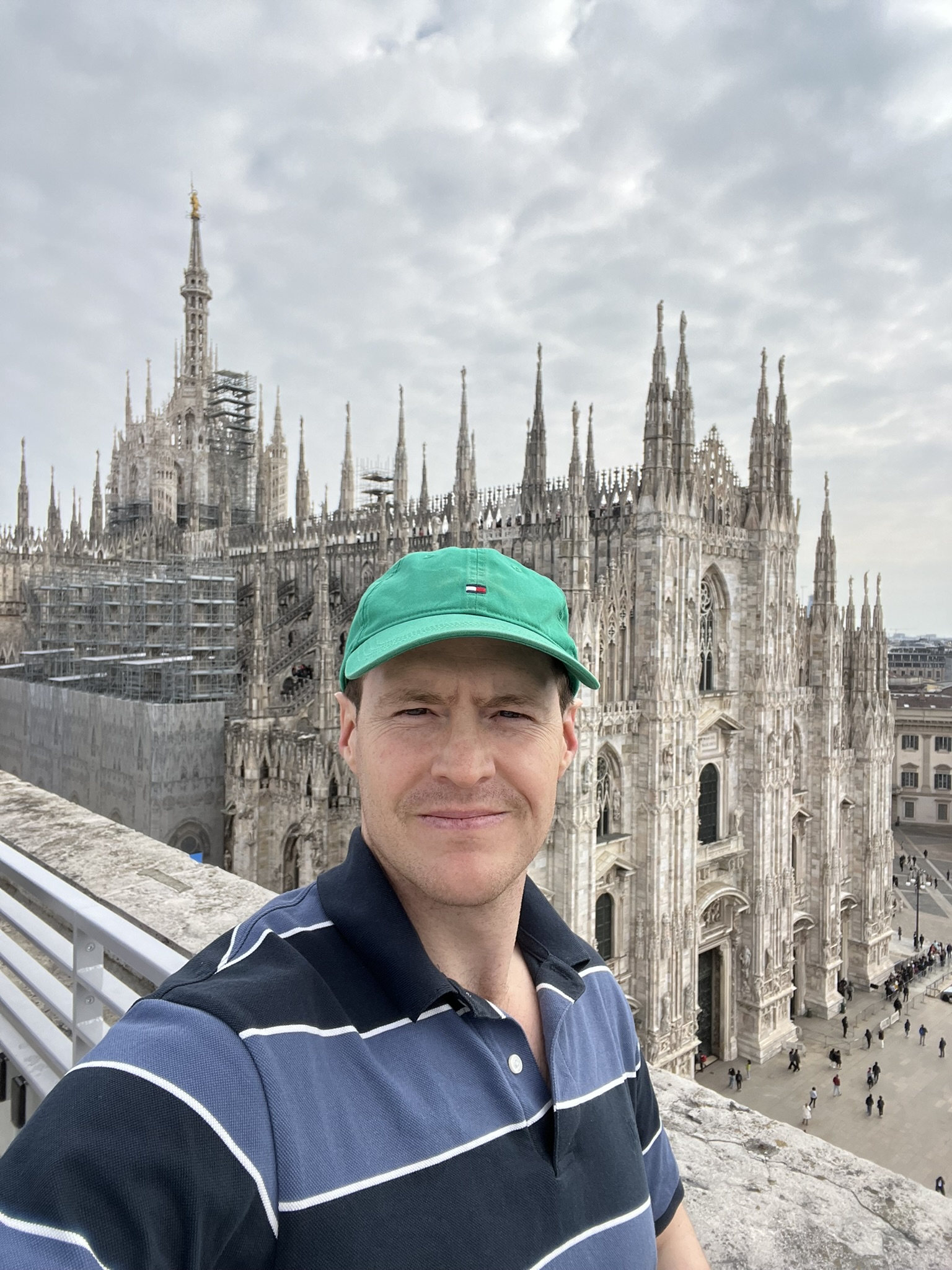
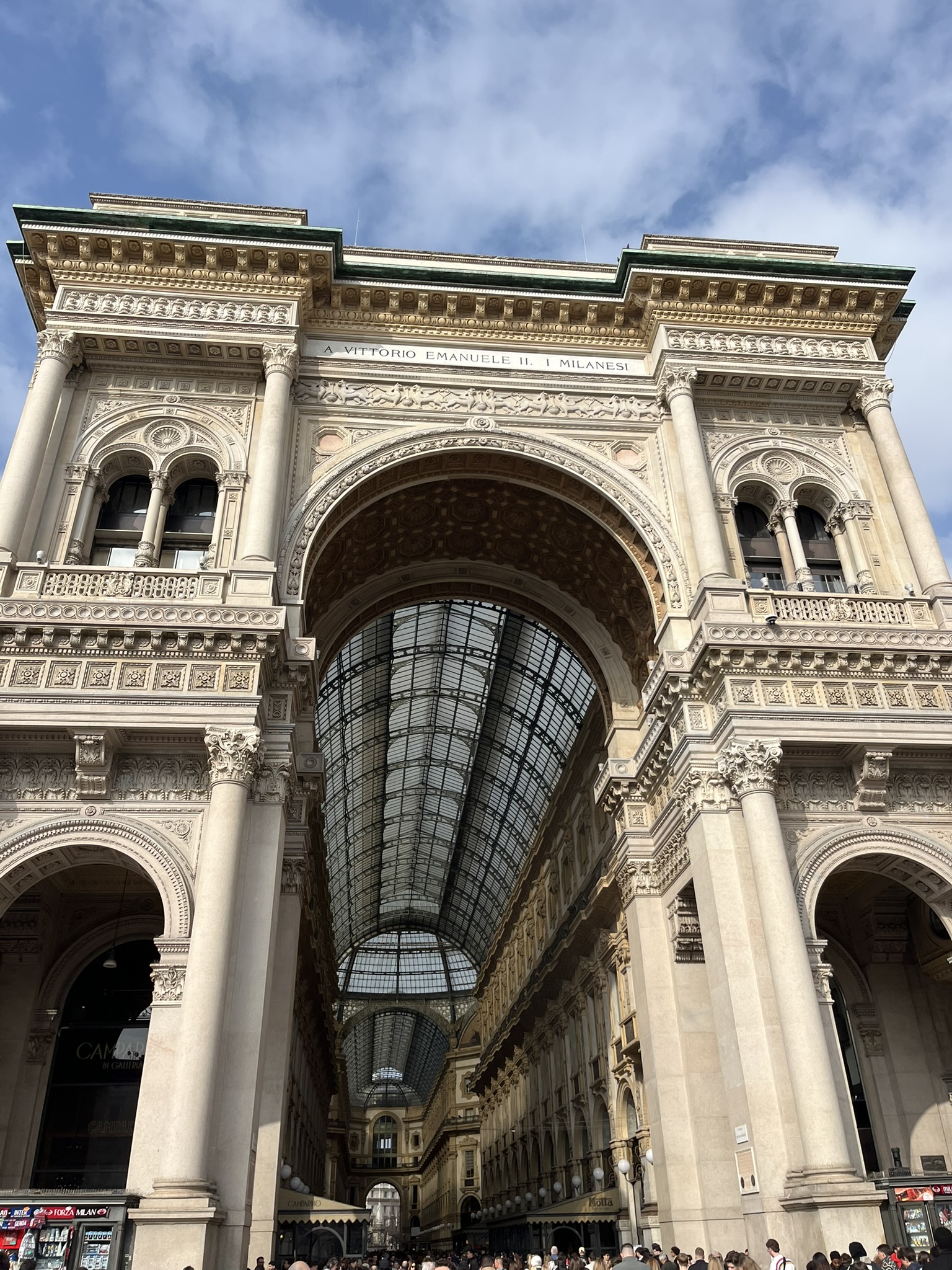
Next was the Galleria Vittorio Emanuele II, Italy’s oldest shopping arcade. Its glass-vaulted galleries connect the Piazza del Duomo to the Piazza della Scala, topped by a spectacular central dome. The architect, Giuseppe Mengoni, tragically fell to his death from the scaffolding just one day before its grand opening on 30th December 1877 (talk of fate and tragedy). Inside you’ll find Italy’s top fashion houses and the legendary Camparino café. I then headed up onto the roof for the Skywalk – a 250-metre walkway along the former maintenance paths above the arcade, some 40 metres above street level, tracing the rooftops from La Scala theatre to the Duomo. At €15, I’d recommend it without hesitation. Using an app, you get a running audio commentary on the surrounding landmarks – the recently developed modern skyline, the Sforza Castle, and of course the magnificent Duomo itself. At the walkway’s end is the fascinating “clock room”, where the city’s municipal clocks were once calibrated. I believe this experience only recently reopened to the public, so I felt particularly lucky to catch it.
After a quick pizza – when in Milan – I took a stroll along Via Montenapoleone, the city’s legendary fashion street. With fashion week in full swing, I spotted a few models including Faye Peraya, who models for the Ferragamo brand. Then it was time for the main event: the Duomo.
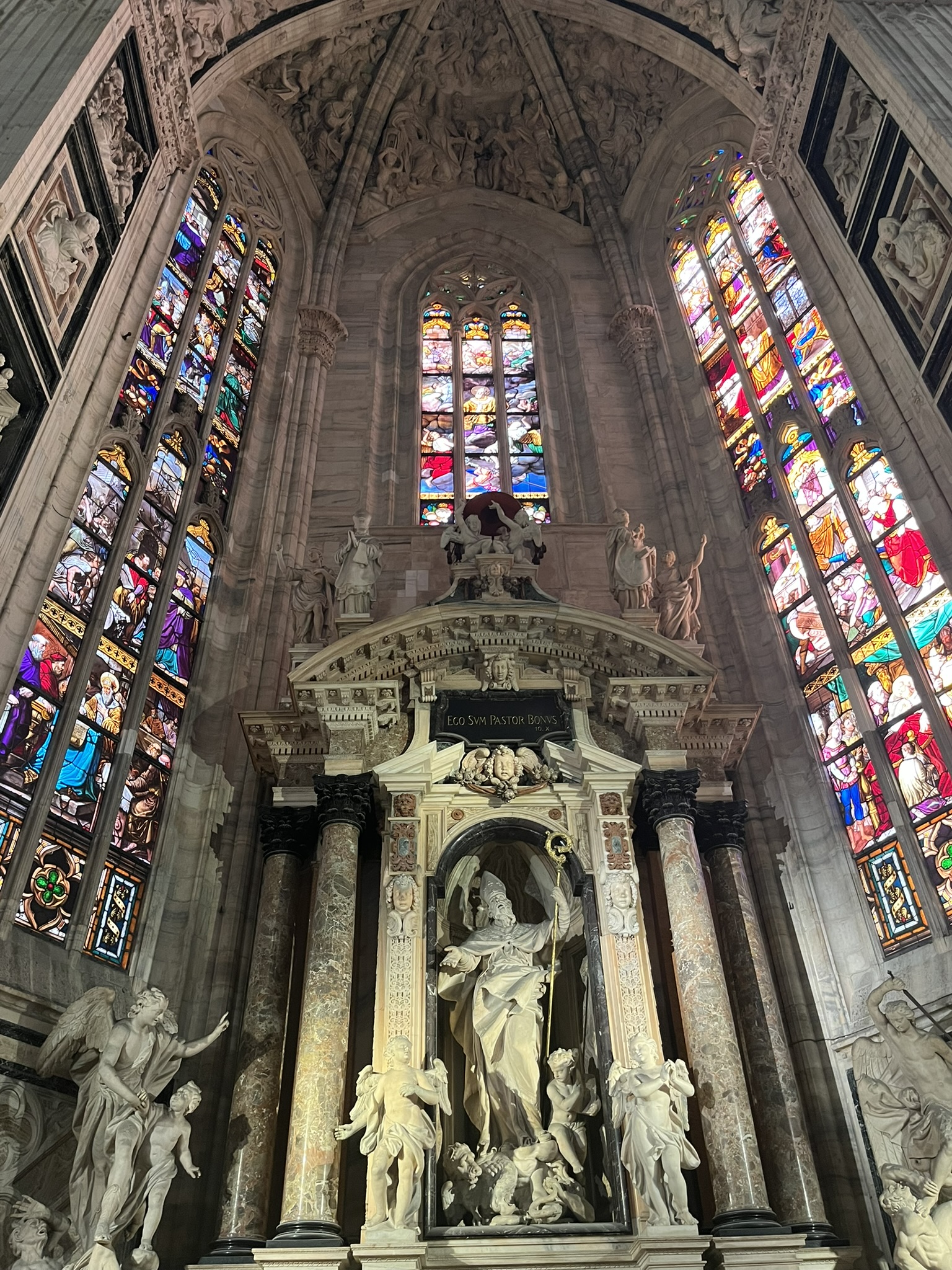
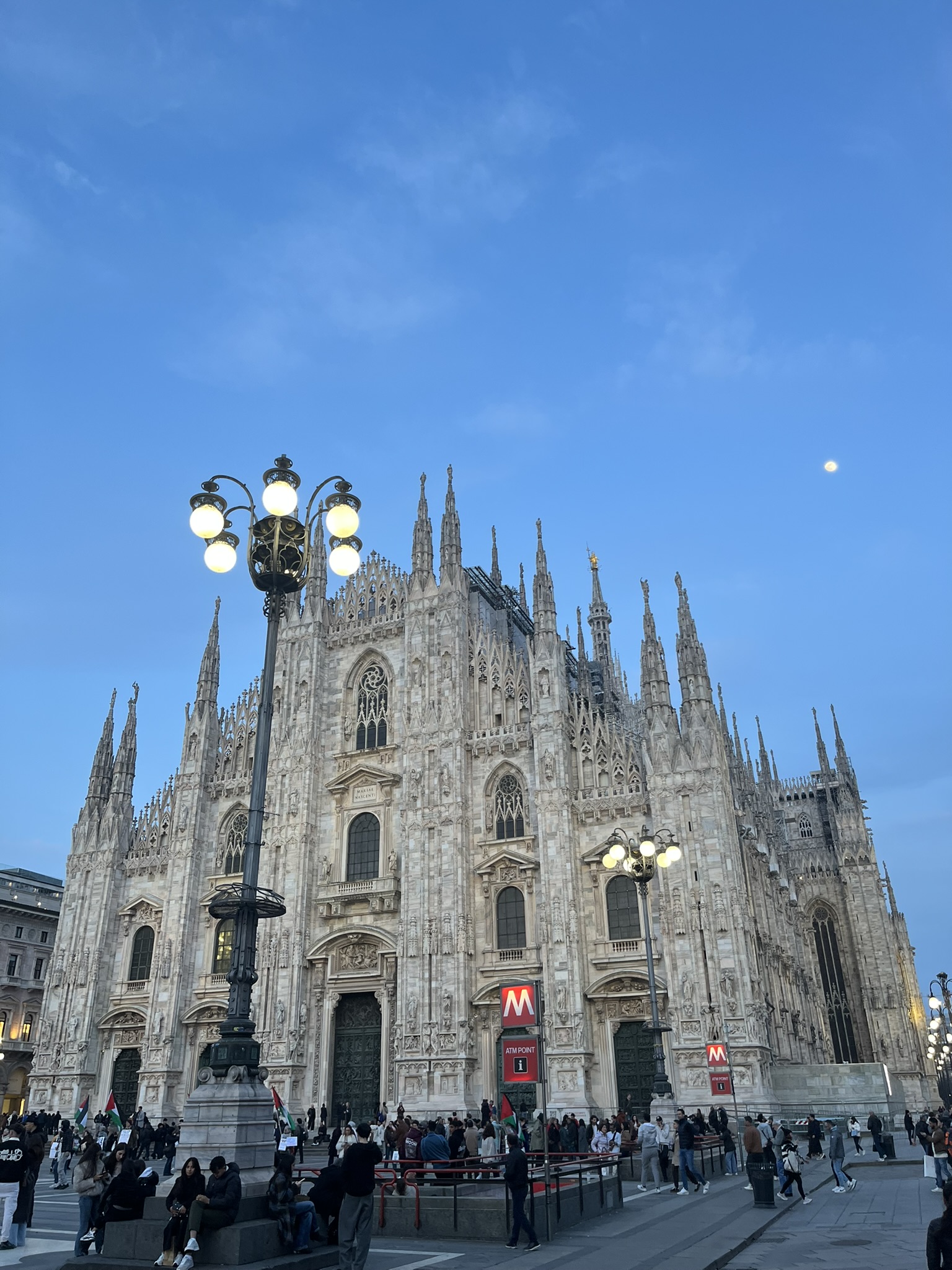
The Duomo di Milano is one of the most extraordinary buildings I’ve ever seen. Construction began in 1386 and, remarkably, took nearly 600 years to complete – the finishing touches weren’t added until 1965. (The Sagrada Familia in Barcelona pales in significant at around 140 years to build). Above the altar, a single red light marks the spot where a nail believed to be from the crucifixion of Christ is kept. The stunning pink-white marble came from quarries near Lake Maggiore, transported by canal. The main façade wasn’t completed until 1813, when Napoleon ordered it finished in time for his coronation as King of Italy – a cathedral as symbol of imperial power.
(If you haven’t seen Andrea Bocelli singing Amazing Grace from outside the Duomo at the start of the pandemic lockdowns, I’d urge you to look it up — it’s deeply moving.)
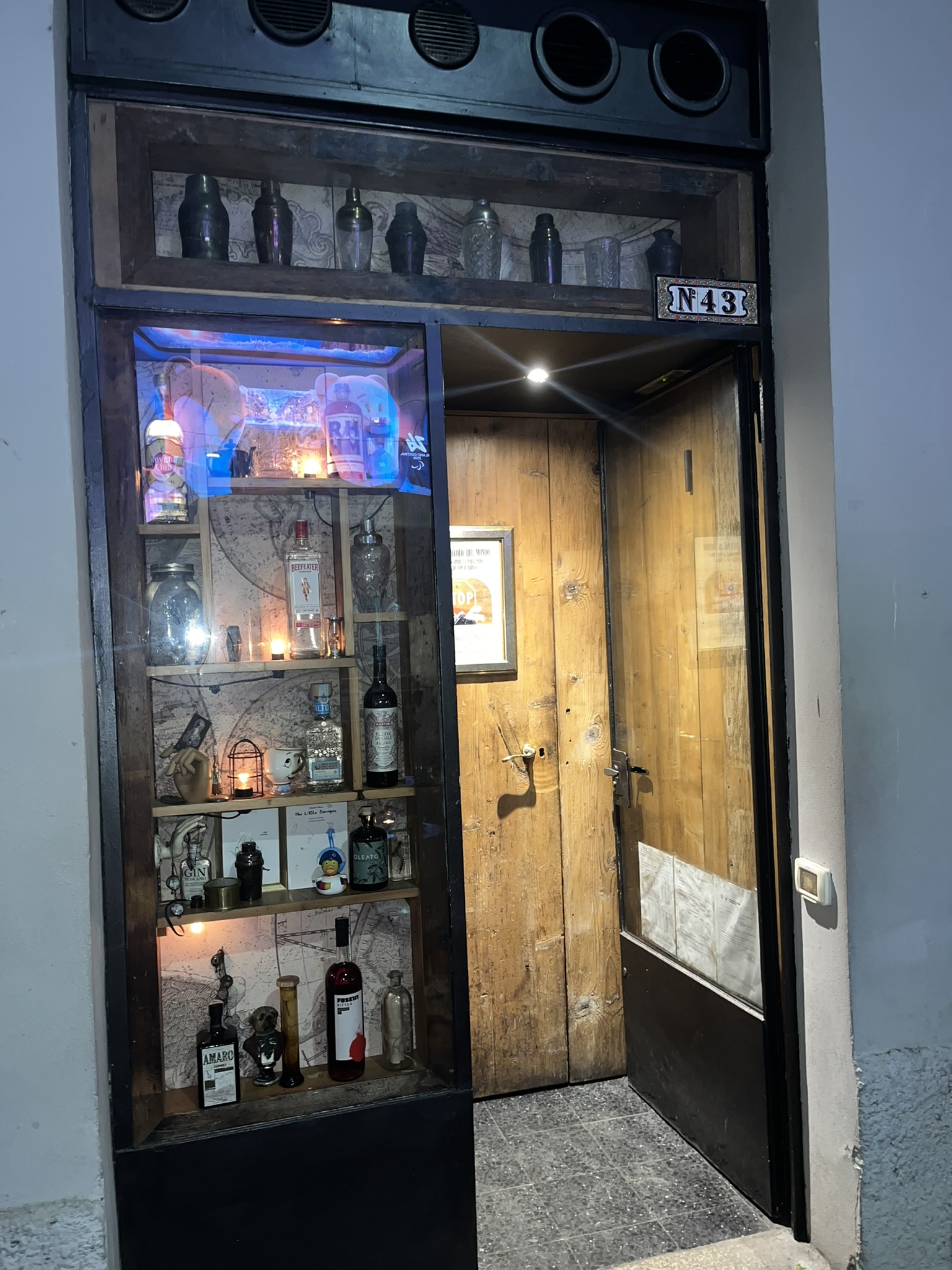
After more than 20km on foot, I returned to the hostel to shower and recover before heading to the Navigli district for aperitivo. This lively canal-side neighbourhood is the perfect place to spend an evening. I stumbled across Backdoor 43 – apparently the world’s smallest bar, with capacity for just three or four people and requiring advance booking. A wonderful discovery.
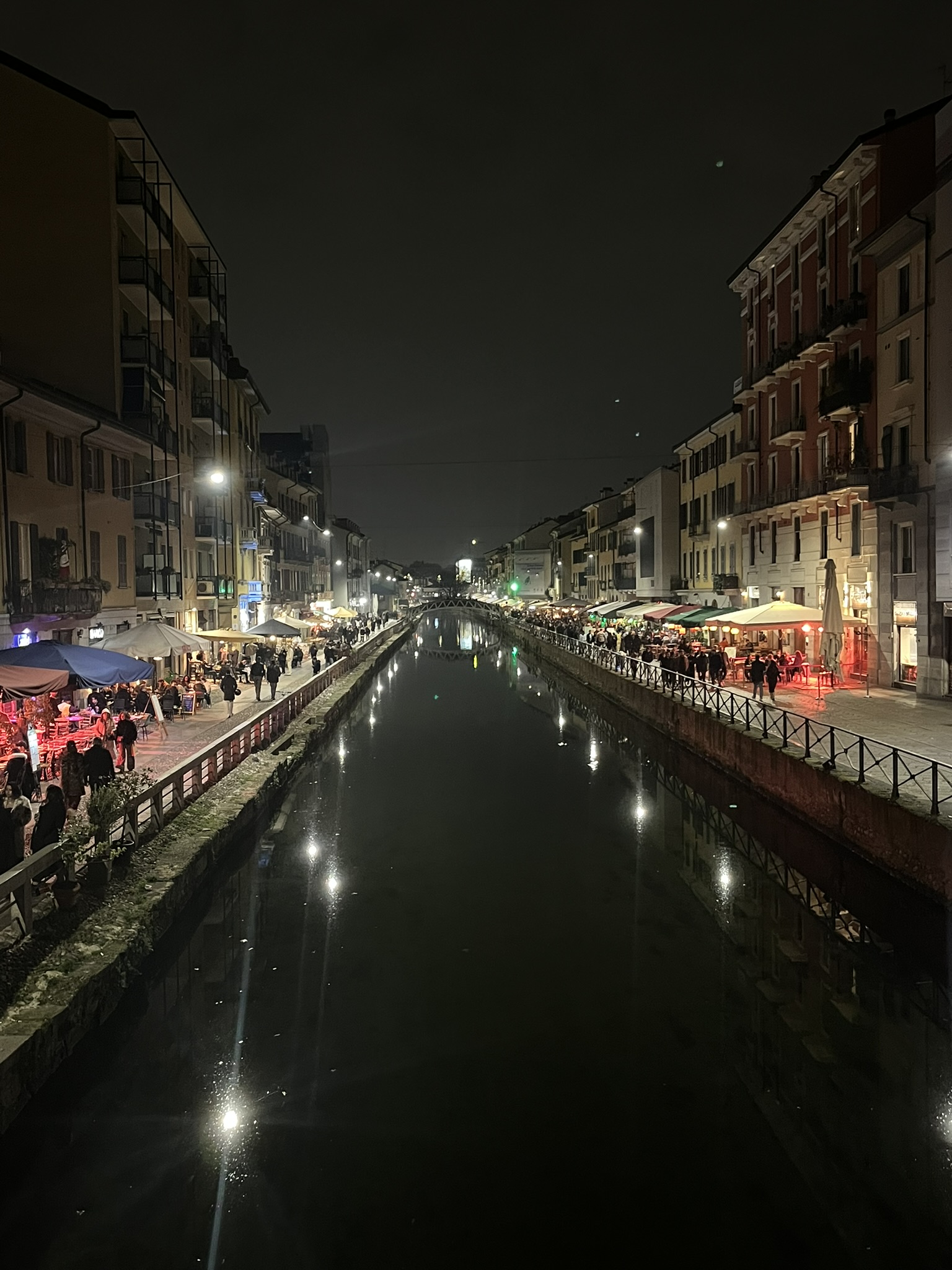
Day Two: The Bernina Express (The DIY Version)
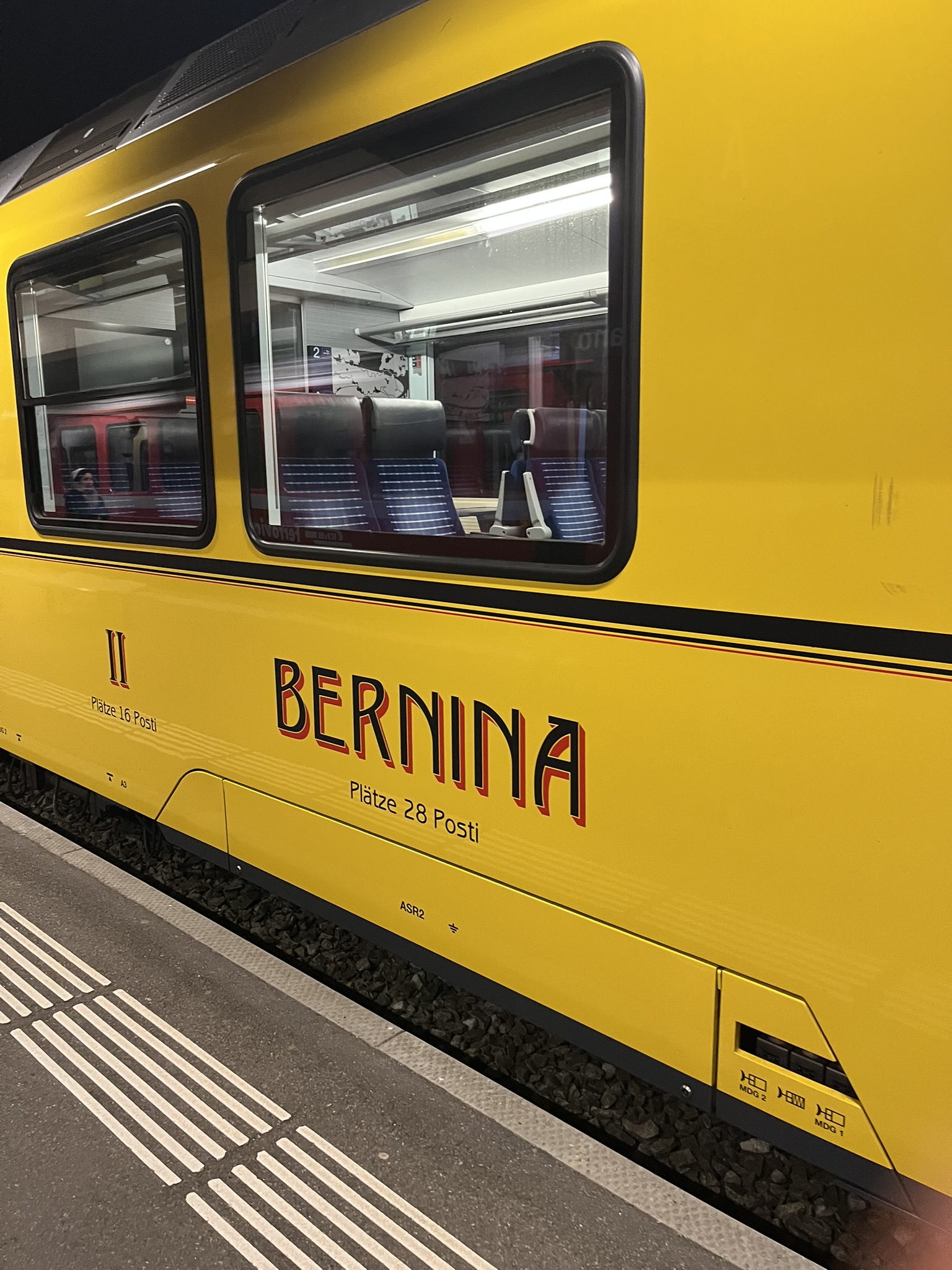
Up early to catch the 8.20am train from Milano Centrale. Before the trip, I’d read that the legendary Bernina Express – one of the world’s most celebrated rail journeys, connecting northern Italy with Switzerland – could be done on standard local trains rather than paying the premium for the official tourist service. I decided to put this to the test.
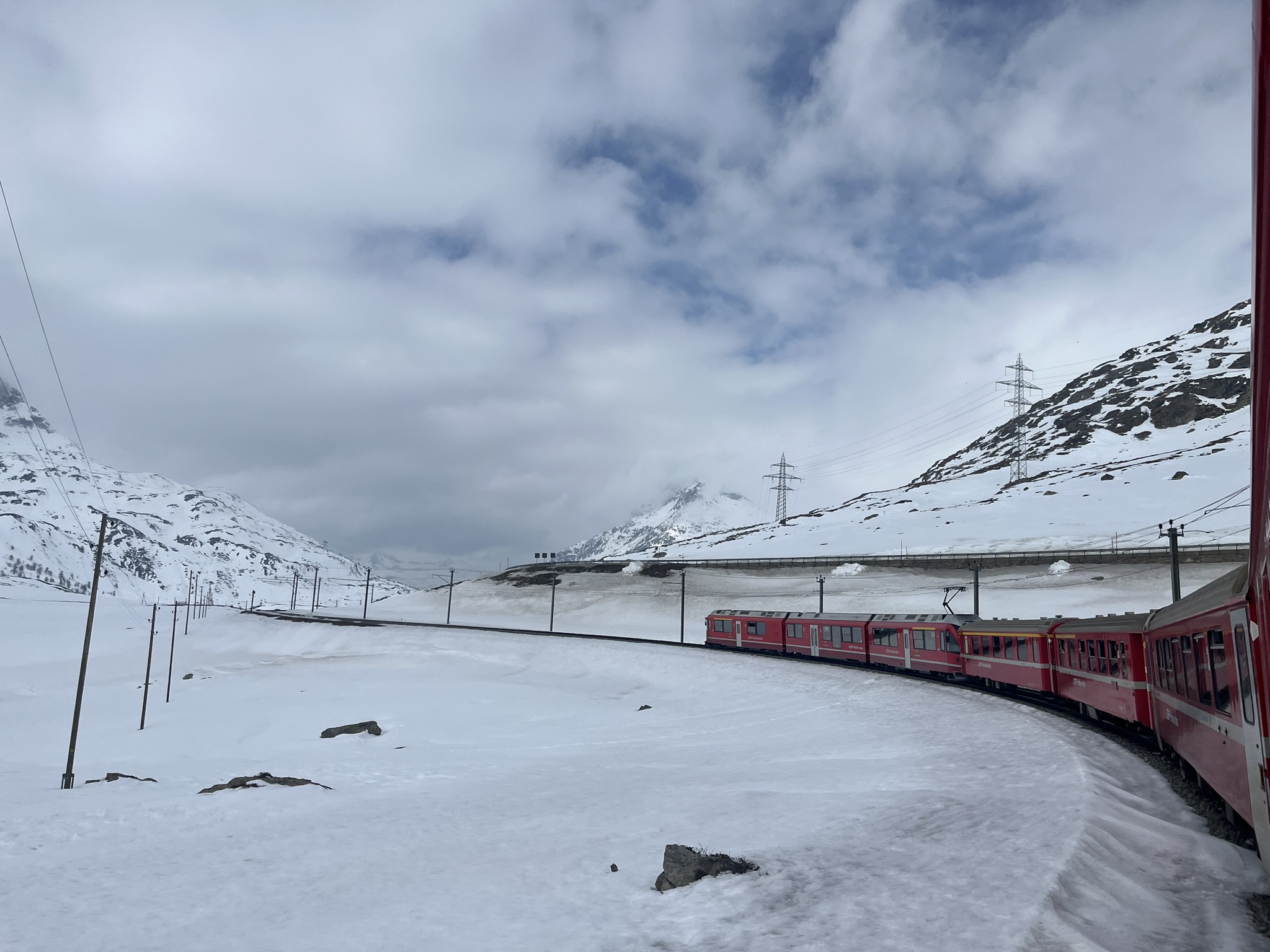
After a two-hour journey from Milan, skirting the shores of Lake Como, I changed trains at Tirano – a pretty little town I’d have liked to have spent more time exploring -and boarded the service climbing towards St. Moritz. Within half an hour, patches of snow began appearing on the mountainsides; by the final hour, the landscape was an unbroken expanse of snow and ice.
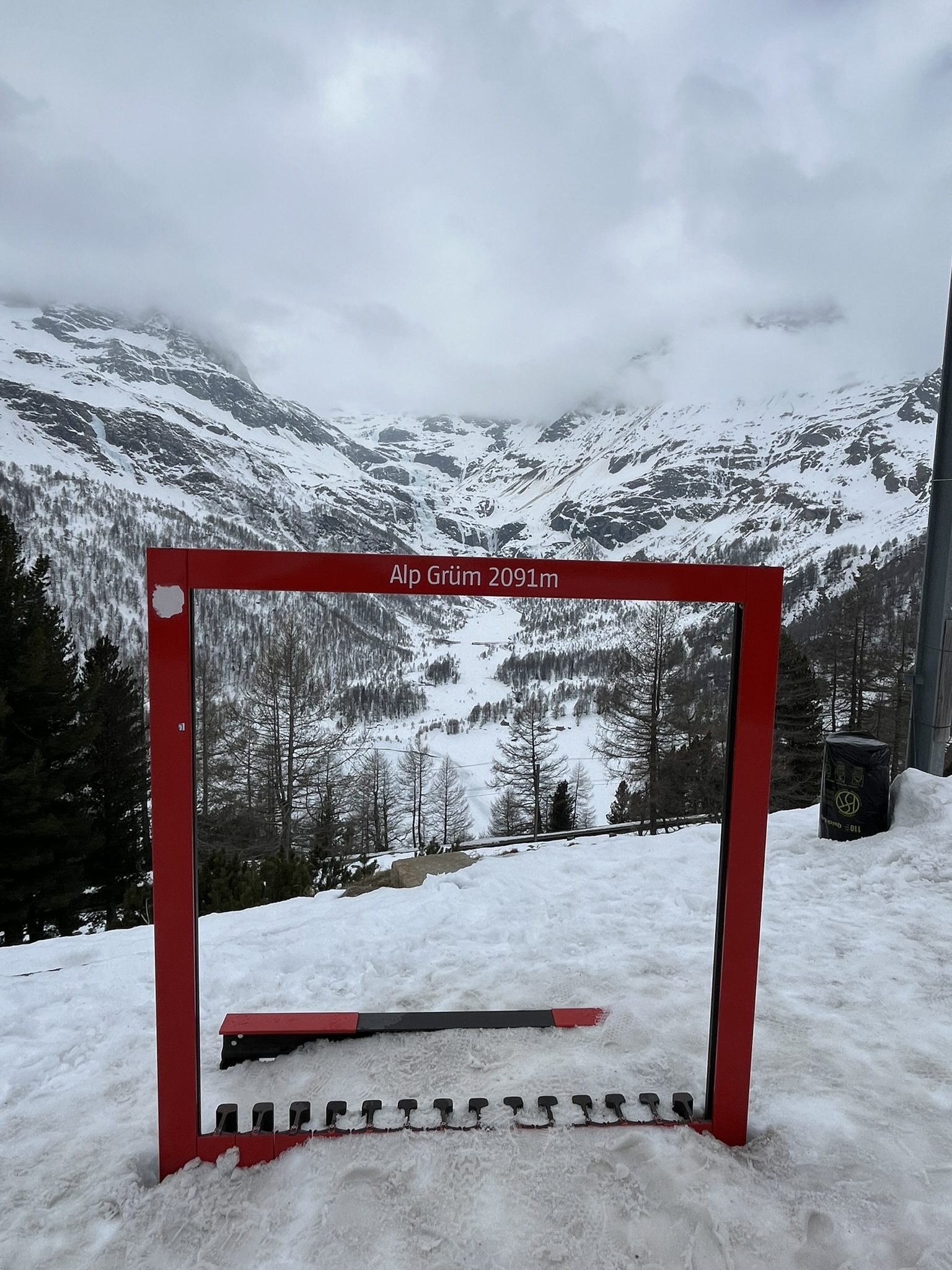
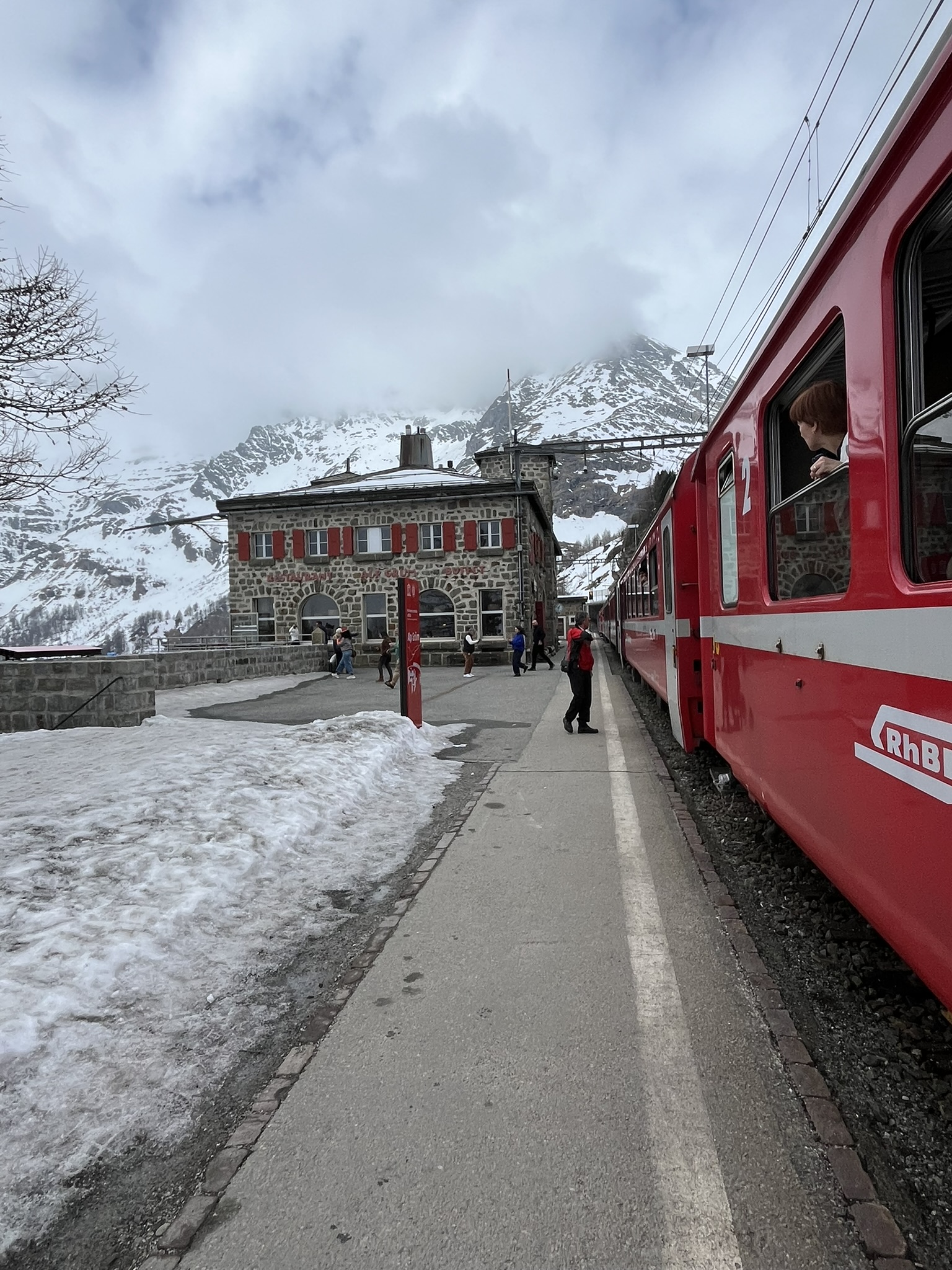
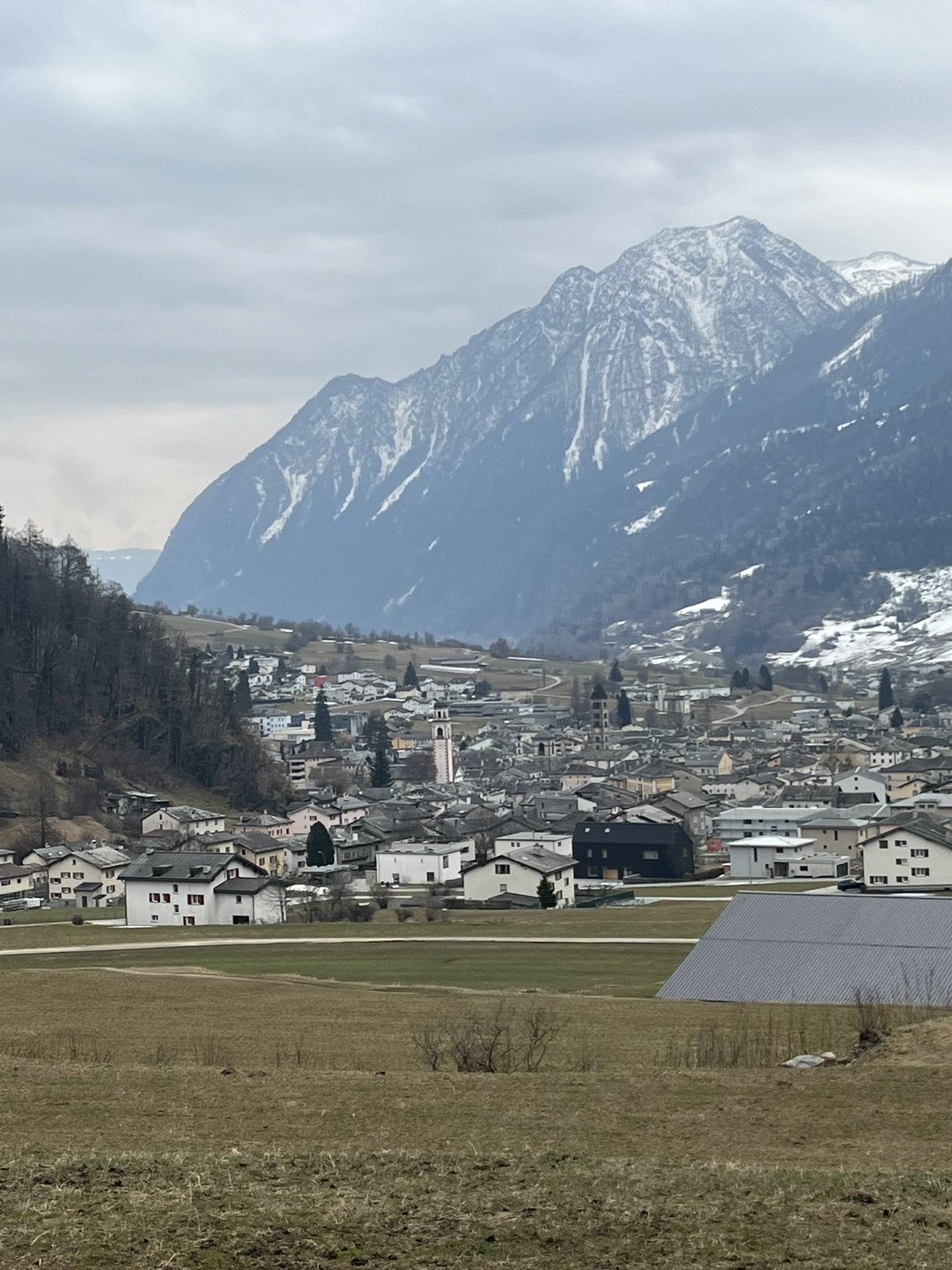
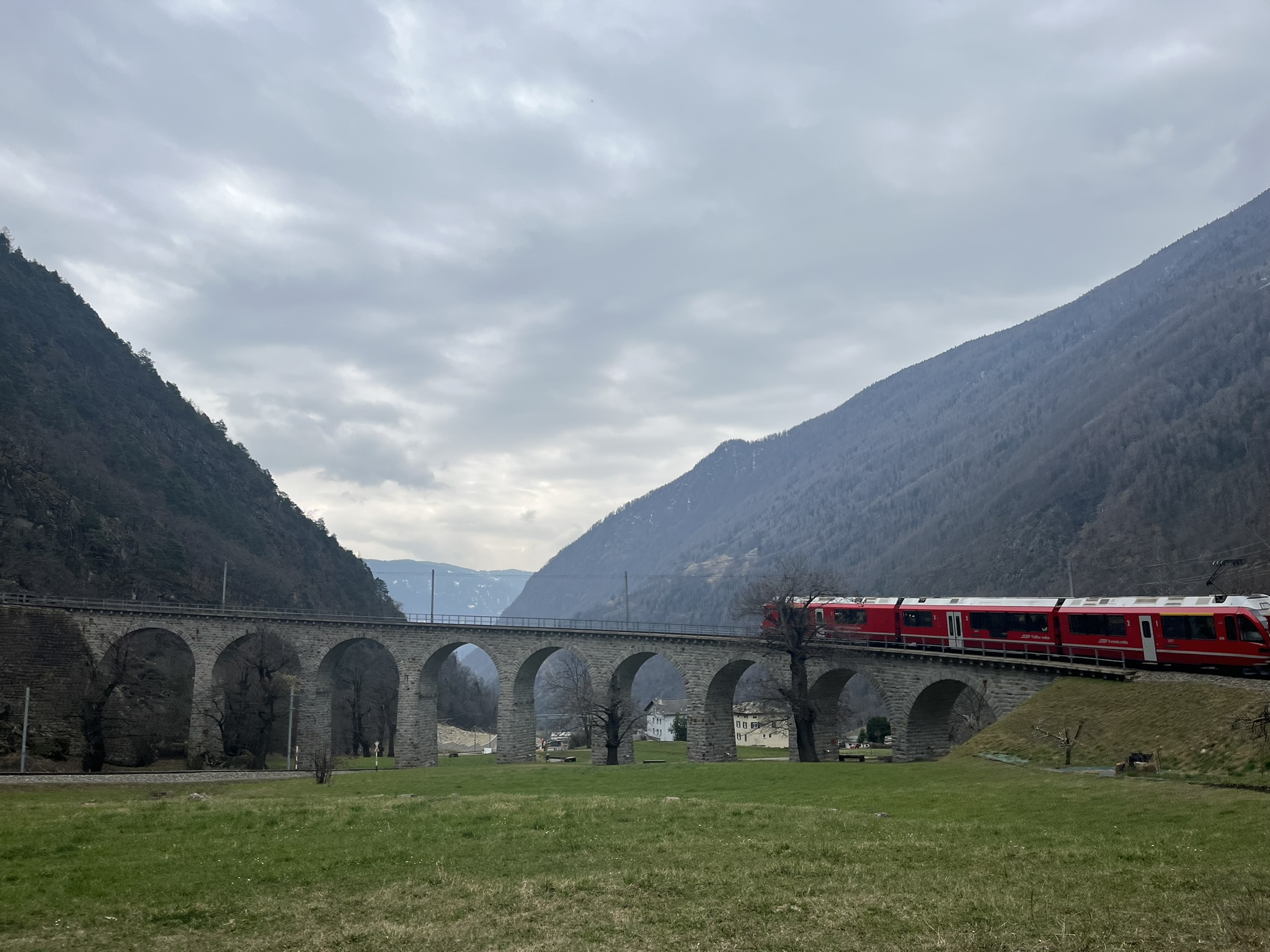
The highlights came thick and fast: sweeping viaducts; Poschiavo, a beautiful Italian-speaking Swiss town in a valley of the same name; the Morteratsch Glacier lying beneath the Bernina massif; and Alp Grüm, an isolated station perched on the mountainside with breathtaking views down into Italy. The train stops here for a few minutes – just enough time to jump out and take photographs. On a future visit, I’d make time for a coffee in the station restaurant.
Finally, we arrived at St. Moritz 0 the glamorous Alpine resort synonymous with luxury skiing. The town sits above a lake which, in winter, freezes solid enough to host horse racing, polo and even cricket; in summer, apparently, it’s ideal for windsurfing and kitesurfing. I picked up some groceries from a local shop, found a bench in the square, and soaked it all in. I also ducked into Café Hanselmann, an institution in St. Moritz since 1894, serving traditional Swiss pastries and hot chocolate with magnificent views over the lake and mountains. I only discovered it towards the end of my time there, a shame, as it would be the perfect spot to while away a couple of hours.
Not wanting to miss my train back ahead of an early morning flight, I caught the 16.48 from St. Moritz to Tirano and then on to Milan, arriving back around 10pm. All in all: 14 hours, door to door, mostly on trains. But the scenery was extraordinary – a 10/10 railway experience.
The Journey Home (and Some Final Thoughts)
The return journey was, to put it diplomatically, less glamorous. Up at 2.30am for the 3am coach to Bergamo airport, onto the 6am Ryanair flight, and back home just after 9am — in time for a day at the office. Ryanair is extraordinary value, but you have to go in with your eyes open about the inconveniences that come with it.
Before I went, I’d heard mixed things about Milan. “It’s a business city,” people said. “Not much to see.” Having now visited Rome in February last year and Milan this February, I’d push back on that. Italy is simply a remarkable country – one that rewards repeated visits and still leaves you feeling you’ve barely scratched the surface. I’ve been to Florence and Turin before, and there are countless places I still want to see: Venice, Verona, Trieste, Naples, Sicily and beyond.
Milan, in truth, can largely be covered in a day or two if you’re focused. But the Last Supper and the Duomo alone are worth the trip. And with a Ryanair return for £30, there’s really no excuse not to go.